If you're reading this message, you're one of the lucky ones: you know how not to dismiss someone.

“If you’re in this call, you’re one of the unlucky ones” – that’s how 900 people were dismissed via Zoom by an American entrepreneur. As a Belgian employer, you should certainly not take this as an example, because what is possible in the U.S. is not necessarily possible here.
Nevertheless, in our legal practice as well, we notice that employers struggle with the correct way to dismiss an employee. The approach sometimes leaves something to be desired, but the main issue turns out to be that many employers only start thinking about dismissal once it is already too late. From the moment the employer has “had enough” of the behavior or suitability of the employee concerned, we start receiving questions such as: “How do I go about this?”. Be aware that such a dismissal is not feasible on short notice without risk.
Since 2014, there has indeed been CBA 109 regarding the justification of dismissal. When it was drawn up, the National Labour Council literally wrote: “A good HR policy is based on a continuous dialogue (informal and/or formal) between the employer and the employee throughout an entire career. A possible prior interview, when the employer intends to proceed to dismissal, can form part of this continuous dialogue.”
A dismissal based on reasons unrelated to the employee’s suitability or conduct, or that is not based on the operational requirements of the company, institution, or department, and which a normal and reasonable employer would never have decided upon, is considered a manifestly unreasonable dismissal. As a result of such a dismissal, an employer will owe the employee compensation that can amount to up to seventeen weeks’ pay.
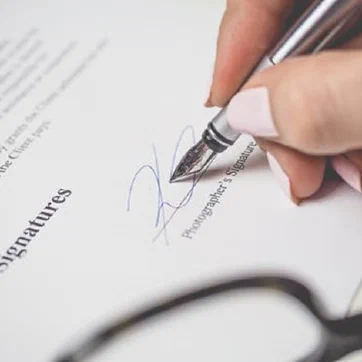
If we may advise you as an employer, we would like to emphasize above all the importance of a formal dialogue. After all, when you dismiss an employee, that employee has the right to know why. A formal dialogue in which it is made clear what is expected of the employee at the start of the employment, with regular interim discussions to evaluate performance, should preferably be put in writing and signed by both employee and employer. Only in this way can you prove that the dismissal is related to the employee’s suitability or conduct.
Another positive aspect is that, through timely formal evaluation moments, the employee will better realize that he or she needs to work on their behavior and/or suitability, which may prevent a dismissal from happening at all. That is certainly a welcome bonus in this era of the “war for talent”.
Wim SMET
More information? Contact us at contact@alisadvocaten.be